


 Sell To Us Add Skype
Diablo 4: Lord of Hatred Release Date & All New Content
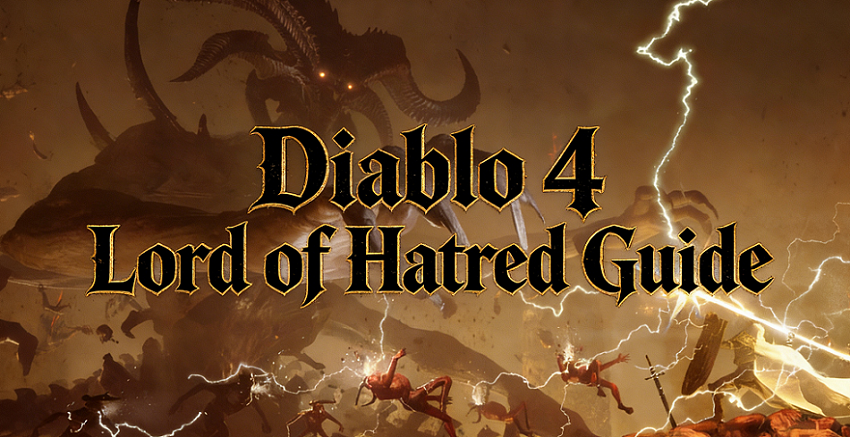
Diablo 4, one of the most popular action role-playing games (ARPGs) in the world, is getting a massive new expansion called Lord of Hatred, which will come with Version 3.0. This expansion is set to change almost every part of the game—from new classes to brand-new systems, endgame activities, and quality-of-life improvements. Whether you are a new player or a veteran who has played Diablo 4 for a long time, you will find all the information you need here: release date, new class, new content, new items, how to play, and much more.
When Will Diablo 4: Lord of Hatred Be Released?
While Blizzard (the game developer) has not announced an exact release date yet, we know from official 30th-anniversary spotlights and developer hints that Lord of Hatred will launch in late April 2026. This timeline makes sense because the expansion is part of Diablo’s 30th-anniversary celebration, which is a big milestone for the series.
Before the full expansion comes out, there are two important dates you need to remember:
March 5, 2026: A special Warlock Class Developer Update. Blizzard will share all the full details about the new Warlock class on this day—including its complete skill tree, lore (background story), gameplay mechanics, and how it will work differently from other classes in Diablo 4. Right now, we only have information based on the Warlock in other Diablo games (like Diablo 2: Resurrected and Diablo Immortal), but March 5 will give us the official Diablo 4 Warlock details.
Season 12 (Before Late April): Season 12 will launch before Lord of Hatred, and it will introduce Torment 5 difficulty—the hardest difficulty in the game so far. This season will also add blood-themed content, such as bloody dungeons, blooded layer bosses, and blooded infernal hordes. Season 12 is a great chance to prepare for the expansion: you can level up your characters, collect materials, and get used to the new Torment 5 difficulty.
Another important note: Lord of Hatred is a paid expansion, but some of its updates (like the full skill tree rework) will be available to all players, even if you don’t buy the expansion. This means every player can enjoy better build customization, no matter if they get the new content or not.
What Is Diablo 4 Lord of Hatred?
Lord of Hatred is not just a small update—it’s a complete expansion that builds on everything Blizzard has learned from Diablo 4 since it launched. The main theme of the expansion is the eternal conflict between light and darkness: the Paladin (a holy class added earlier) represents light and purity, while the new Warlock represents darkness and chaos. This “duality” (two opposite forces working against each other) is at the heart of the expansion’s story and gameplay.
The expansion’s story is a direct continuation of Diablo 4’s main story and the first DLC. It focuses on Mephisto, the Lord of Hatred, whose shadow looms over the new region of Scoos. You will uncover secrets of the firstborn, ancient wars, and the origins of humanity (where Lilith and Anarius began their journey). The story will take you through new areas, new dungeons, and new boss fights, all leading to a big “reckoning” (final showdown) that will change Sanctuary (the world of Diablo 4) forever.
Blizzard’s goal with Lord of Hatred is to fix the things players didn’t like (like small skill trees or repetitive endgame) and add new content that keeps players coming back. They want the endgame to be just as fun and rewarding as the main campaign, which is why they added so many new systems and activities.
New Class: The Warlock
The Warlock is the second new class in Diablo 4 (after the Paladin) and the star of the Lord of Hatred expansion. It is often called the “anti-hero” of the game—unlike holy classes like the Paladin, the Warlock uses the power of hell, demons, and dark magic to fight enemies. Think of it as the dark opposite of the Paladin: while the Paladin uses holy light to heal and protect, the Warlock uses demonic flames and summoning to destroy and punish.
Warlock’s Lore (Background Story)
The Warlock’s journey spans the entire Diablo universe. In Diablo 2: Resurrected, they were just starting to learn their arcane (magic) powers. In Diablo Immortal, they became more rebellious, embracing darker forces and forging their own path. Now, in Diablo 4: Lord of Hatred, the Warlock is at the height of their strength—fully unleashed and ready to shape the fate of Sanctuary. Blizzard describes the Warlock as “a heavy metal album cover come to life” because of its dark, fiery, and destructive style.
Warlock’s Gameplay & Skills (Based on D2R + Hints)
While we don’t have the official Diablo 4 Warlock skills yet (we’ll get them on March 5), we can guess what they will be like based on the Warlock in Diablo 2: Resurrected (which is very similar). The Warlock’s gameplay focuses on three main things: summoning demons, using dark magic, and being versatile (able to adapt to different build styles).
Demon Summoning
The Warlock can summon three different types of demons to fight for them. These demons are loyal and will help you attack enemies, tank (take damage), or provide buffs (bonus effects). Here’s what we know about each summon:
Goat Man: A strong, melee (close-range) demon that attacks enemies with its claws or a weapon. It’s good for tanking damage and distracting enemies while you cast magic.
Tainted: A faster demon that can move quickly around the battlefield. It’s good for chasing down enemies or picking off weak targets.
Defiler: A demon that uses dark magic to poison or weaken enemies. It’s good for crowd control (stopping groups of enemies) and supporting your other summons.
But summoning demons isn’t the only thing you can do—you can also consume your demons (destroy them) to get bonus effects. Consuming a demon will give you increased life (health), faster movement speed, and other buffs (like more damage or defense) for a short time. Alternatively, you can bind a demon to yourself: this makes both you and the demon stronger, but you can only bind one demon at a time.
Magic Schools (Skill Trees)
The Warlock has three main magic schools, each with its own set of skills. These schools will likely be part of the Warlock’s skill tree in Diablo 4:
Eldritch Tree: This tree focuses on summoning weapons and using close-range magic. You can summon a magical weapon to slash enemies in front of you, or use “mirrored blades”—duplicates of your own weapon that attack enemies automatically. These skills are good for players who want to fight close to enemies while still using magic.
Chaos Tree: This tree is all about destructive magic. It includes skills like Miasma Bolt (a dark energy bolt that poisons enemies), Miasma Chains (chains that trap enemies and drain their health), Apocalypse (a powerful ultimate skill that causes massive chaos and damage), Flame Waves (waves of fire that burn enemies), Fire Nova (an explosion of fire around you), and Ring of Fire (a ring of fire that traps enemies and burns them over time). These skills are perfect for players who want to deal lots of damage to groups of enemies.
Demonic Tree (Guessed): While not explicitly mentioned, it’s likely the Warlock will have a tree focused on demon summoning and buffs. This tree would let you upgrade your summons, make them last longer, or give them new abilities (like more damage or healing).
Overall, the Warlock is a very versatile class. You can build it to be a summoner (focus on demons), a spellcaster (focus on chaos and eldritch magic), or a mix of both. Blizzard says the Warlock will be “fun for all playstyles,” so no matter how you like to play, you can find a build that works for you.
New Region & City: Scoos & Temis
Lord of Hatred adds a brand-new region to Diablo 4 called Scoos, which is the main setting for the expansion’s campaign and endgame. Scoos is visually inspired by ancient Mediterranean landscapes—think rugged coastlines, mountainous highlands, ancient temples, and sunny (but dangerous) beaches. It’s a beautiful but deadly place, filled with new monsters, secrets, and challenges.
Scoos: Key Features
New Monsters: Scoos has more monster variety than any other region in Diablo 4. You will face new demons, corrupted humans, and ancient creatures that are unique to this area. These monsters are stronger and more varied than the ones in other regions, so you will need to adapt your build to fight them.
Ancient Secrets: Scoos is the birthplace of humanity—this is where Lilith and Anarius first created Sanctuary. As you explore, you will uncover secrets of the Ascari (ancient warriors), the Primevalss (the first beings), and the ancient wars that shaped the world. Every corner of Scoos has a story, and you can find hidden dungeons, lore books, and rare items by exploring off the main path.
New Dungeons: Scoos has dozens of new dungeons, each with unique themes and boss fights. These dungeons are longer and more challenging than the ones in the base game, but they also drop better loot (like unique charms and legendary Diablo 4 items).
Temis: The New Endgame Hub City
In Scoos, there is a new main city called Temis, which will replace Kagar and Kovich as the main endgame hub. Temis is a bustling city with marble walls, eerie elegance, vibrant patterns, and rich textures—it’s both beautiful and haunting. Here’s what you can do in Temis:
All Vendors & NPCs: Every important NPC (non-player character) is in Temis—blacksmiths, jewelers, potion sellers, and quest givers. You won’t need to travel back to old cities anymore; everything you need is in one place.
Horadri Cube: The Horadri Cube (a new crafting system) is located in Temis. You can use it to craft, upgrade, and recycle items.
War Plans: You can access the War Plans system in Temis, where you create your own endgame playlists.
The Pit: The entrance to The Pit (a popular endgame activity) is in Temis.
Town Square: The town square is a busy place where you can hear whispers of the firstborn and learn more about Scoos’ lore. It’s also a great place to meet other players and trade items (if trading is added).
Blizzard built Temis to be “player-friendly”—it’s designed to streamline your endgame experience, so you spend less time traveling and more time playing. Whether you are crafting items, planning your next endgame run, or just selling loot, Temis is the place to be.
New Systems: Talisman & Charms (Detailed Guide)
The Talisman is one of the biggest new systems in Lord of Hatred. It’s a brand-new equipment slot (next to your helmet, chest, gloves, etc.) that lets you collect and use charms—small items that give you bonus stats and set effects. This system is inspired by Diablo 2’s charm system but has been reimagined for Diablo 4.
How the Talisman Works
To use the Talisman, you need to follow three simple steps:
Get the Talisman: The Talisman will be unlocked early in the Lord of Hatred campaign. Once you unlock it, it will appear in your equipment menu as a permanent slot.
Get the Centerpiece: Horadri Seal of Honor: The Talisman needs a “centerpiece” item to work—this is the Horadri Seal of Honor (a unique item). You can get this seal by completing a main quest in Scoos. The Horadri Seal of Honor has two big benefits:
It gives you +45% total armor (a huge defense boost).
It unlocks 5 charm slots (out of a possible 6). Normally, you can only equip 1 unique charm, but the seal lets you equip 2.
Collect & Slot Charms: Once you have the seal, you can start collecting charms. Charms drop from monsters, chests, and dungeons. To use a charm, you just drag it into one of the Talisman’s slots. Only slotted charms will give you their bonus stats.
Types of Charms
Charms come in five different rarities, each with different power levels. They also have different types (normal, set, unique) that affect their bonuses:
Magic Charms: The most common type. They give small bonus stats (like +5 strength or +10 life).
Rare Charms: Less common than magic. They give better stats (like +15 dexterity or +20% damage to demons) and sometimes have two stats.
Legendary Charms: Rare and powerful. They give big bonus stats (like +30 intelligence or +50% critical strike damage) and sometimes have a unique effect (like “summons a demon when you take damage”).
Unique Charms: Very rare. They have one-of-a-kind effects that can change your build (like “all chaos skills deal 20% more damage”). You can equip up to 2 unique charms with the Horadri Seal of Honor.
Set Charms: The most powerful type. These are charms that belong to a set (like the Narrow Eye set). Equipping multiple charms from the same set unlocks set bonuses (extra powerful effects).
Charm Stats (Random & Set Bonuses)
All charms have random stats—this means no two charms are exactly the same. Some common stats you can get from charms include:
Damage: +% damage, +damage to specific enemy types (demons, undead), +critical strike damage.
Defense: +life, +armor, +resistance to elements (fire, cold, poison).
Quality of Life: +crafting material drop rate, +experience gain, +gold drop rate.
Skill Bonuses: +rank to specific skills (like Miasma Bolt or Hydra), +skill damage.
Set charms are the most desirable because of their set bonuses. Let’s take the Narrow Eye Set (one of the first set charms we know about) as an example:
1-piece bonus: +10% damage to Marksman skills (not yet confirmed, but likely).
2-piece bonus: When you cast a Marksman basic skill (like Rapid Fire or Piercing Shot), you gain 1 stack of Vengeance. Each stack increases your damage by 12%, and you can stack up to 5 times (for a total of +60% damage). This is a huge bonus that can make your basic skills much more powerful.
3-piece bonus: While you have any Vengeance stacks, you gain Dark Shrouds. Dark Shrouds are a defensive effect that pushes back enemies when they get too close to you. This helps you stay safe while you attack.
4-piece bonus: Not yet revealed, but likely something like +20% movement speed while Vengeance is active.
5-piece bonus: The full set bonus (not yet revealed) will probably be a powerful effect, like “Vengeance stacks never expire” or “Casting a Marksman skill has a 20% chance to summon a demon.”
The Narrow Eye Set has 5 charms, so there are even more bonuses to unlock. Collecting full charm sets will be a big part of the endgame, as they can completely change how your character plays.
New System: Horadric Cube (Crafting & Item Rework)
The Horadric Cube is a legendary crafting tool from Diablo 2 that is making a return in Lord of Hatred. It is located in Scavvis Island (near Temis city) and is one of the most important new systems for endgame players. The Cube lets you craft, upgrade, recycle, and customize items in ways you couldn’t before. It’s designed to make item hunting more fun and rewarding, and to give you more control over your build.
How to Unlock the Horadric Cube
You will unlock the Horadric Cube by completing a main quest in Scoos. The quest will take you to Scavvis Island, where you will find the Cube hidden in an ancient Horadric temple. Once you unlock it, you can use it anytime you want by traveling to Temis (it’s permanently located there).
All Horadric Cube Recipes (Detailed)
The Cube has many different recipes, each with a different purpose. Below are all the recipes we know about, explained in simple terms:
Amalgation (Upgrade Items)
This recipe lets you combine 3 of the same item to upgrade it. It works on:
Consumables: Potions, scrolls, and other items you use up (like Elixirs).
Dungeon Keys: Keys to unlock specific dungeons (like Nightmare Dungeons or Blood Dungeons).
Other Small Items: Crafting materials, gems, and runes (maybe).
For example, If you have 3 small health potions, you can put them in the Cube to make 1 medium health potion. If you have 3 dungeon keys, you can combine them to make 1 key that unlocks a harder dungeon with better loot.
Recycle Uniques (Get Better Uniques)
This is one of the most useful recipes for endgame players. It lets you combine 3 identical unique items (or unique charms) to get a new version of that unique item. The new version will have different stats, and it might be better than the original.
For example, If you have 3 copies of “The Oathkeeper” (a unique sword), you can put them in the Cube to get a new “The Oathkeeper” with better stats (like more damage or a better unique effect). You can also combine 10 identical uniques to get an even better version—this is great if you have lots of duplicate uniques that you don’t need.
Before the Cube, duplicate uniques were useless (you could only sell them for fast D4 gold or break them down for materials). Now, you can turn them into better items, which makes hunting for uniques more rewarding.
Upgrade to Legendary (Turn Rares into Legendaries)
This recipe lets you turn a rare item into a random legendary item of the same type. To use it, you need:
1 rare item (e.g., a rare sword, a rare helmet).
Raw Primordial Dust (a new crafting material that drops from Torment 5 enemies).
Enhanced Primordial Dust (a rarer version of Raw Primordial Dust, dropped from endgame bosses).
For example, If you have a rare ring, you can put it in the Cube with Primordial Dust to get a random legendary ring. The legendary will have a unique effect and better stats than the rare. This is great if you are missing a specific legendary item for your build—you can farm rares and upgrade them until you get what you want.
Reroll Set Charms (Change Their Stats)
If you have a set charm with bad stats (e.g., a Narrow Eye charm that gives +5 strength instead of +10 damage), you can use this recipe to reroll its stats. You will need the set charm plus some crafting materials. The new stats will be random, but you can keep rerolling until you get the stats you want.
Craft Unique Charms (Make Your Own)
This recipe lets you craft your own unique charms for the Talisman. To use it, you need:
1 legendary charm.
Rare crafting materials (dropped from Echoing Hatred or Torment 5 bosses).
A unique item (to act as a “base”).
Crafted unique charms will have custom effects, so you can make a charm that fits your build perfectly. For example, if you are a Warlock summoner, you can craft a unique charm that gives +20% damage to your demon summons.
Add Affixes (Extra Stats to Items)
Affixes are the extra stats on items (like +15 intelligence or +10% armor). This recipe lets you add a random affix to any item that doesn’t have all its affix slots filled. To use it, you need:
1 item (rare, legendary, or unique) with at least one empty affix slot.
A Tuning Prism (a new item that drops from endgame activities).
The Tuning Prism lets you choose what type of affix you add (e.g., damage, defense, or skill bonuses). For example, If you have a ring with 3 stats, you can use this recipe to add a 4th stat (like +50 life or +10% critical strike chance). This is a great way to make your favorite items even better.
Transmute (Turn 3 Items into 1 New One)
This recipe lets you put 3 items of the same type into the Cube to get 1 new random item of that type. For example:
3 charms → 1 new random charm (could be magic, rare, or even legendary).
3 swords → 1 new random sword (could be rare or legendary).
This is a good way to get rid of unwanted items and get something new. It’s especially useful for charms, as it lets you turn 3 bad charms into 1 potentially good one.
New System: War Plans (Customize Your Endgame)
One of the biggest complaints about Diablo 4’s endgame was that it was repetitive—players would do the same activities (like Nightmare Dungeons or Hell Tides) over and over again. Lord of Hatred fixes this with War Plans, a new system that lets you customize your endgame experience and make it more fun and varied.
What Are War Plans?
War Plans are like “playlists” for endgame activities. You choose up to 5 activities (from a list of available endgame modes) and arrange them in the order you want to do them. Then, you complete the activities in that order to earn rewards. The best part? War Plans let you modify the activities to make them harder, easier, or more rewarding—whatever you want.
Supported Endgame Activities
Tree of Whispers
Hell Tide
The Pit
Lair Bosses (powerful single bosses)
Nightmare Dungeons
Undercity (a new endgame dungeon)
Infernal Hordes (wave-based enemy attacks)
How War Plans Work (Step-by-Step)
Open the War Plans Menu: You can access this menu in Temis (the endgame hub) or from your character menu.
Choose Your Activities: Select up to 5 activities from the list. You can choose the same activity multiple times (e.g., 5 Nightmare Dungeons) or mix different ones (e.g., 1 Hell Tide, 2 Nightmare Dungeons, 2 Lair Bosses).
Customize the Activities: For each activity, you can use “War Plan Points” to modify it. War Plan Points are earned by completing War Plans. You can modify things like:
Rewards: Get more gold, more experience, or better loot.
Difficulty: Make the activity harder (for better rewards) or easier (for faster completion).
Mechanics: Change how the activity plays (e.g., add more enemies, make bosses spawn faster, or disable certain enemy abilities).
Start the War Plan: Once you are happy with your playlist and customizations, start the War Plan. You will be teleported to each activity in order, and you can complete them at your own pace.
Earn Rewards: After completing all activities in your War Plan, you will get a big reward (like legendary items, unique charms, or Primordial Dust). You will also earn War Plan Points to unlock more customizations.
War Plan Skill Trees (For Each Activity)
Every endgame activity has its own skill tree in War Plans. As you complete that activity in War Plans, you earn experience for its skill tree. Leveling up the skill tree unlocks new customizations and bonuses for that activity.
For example, the Infernal Hordes Skill Tree has a customization called “Infernal Bargain”: it disables gem fragment drops but gives you more Obtainable Currency (a useful endgame currency). Another customization in the Nightmare Dungeons Skill Tree lets you make Lair Bosses (like Asteroth or the Beast of Ice) ambush you during a Nightmare Dungeon run. You can even unlock a customization that lets multiple bosses ambush you at the same time—this is very hard but gives amazing rewards.
Who Are War Plans For?
War Plans are perfect for both new and veteran players:
New Players: War Plans make the endgame more accessible. You can choose easy activities, customize them to be simpler, and learn the game at your own pace. You don’t have to worry about getting lost or doing the wrong activities—just pick your playlist and start playing.
Veteran Players: War Plans give you lots of depth and customization. You can make the endgame as hard as you want, mix different activities to keep things fresh, and chase the best rewards. You can even create “challenge War Plans” (like 5 Torment 5 Nightmare Dungeons with multiple boss ambushes) to test your skills.
New Endgame Activity: Echoing Hatred (Survival Mode)
If you love challenging, wave-based survival modes, you will love Echoing Hatred—the new endgame activity in Lord of Hatred. This activity is only available to players who buy the expansion, and it’s designed to test your build and skills to the limit.
How to Unlock Echoing Hatred
Echoing Hatred is not unlocked by completing a quest—you need to find an extremely rare golden key called a “Trace of Echo.” This key drops from loot (monsters, chests, dungeons), but it is very hard to find. Some players might spend hours or days farming before they get one. Once you have the key, you can use it to open a portal to Echoing Hatred (located in Scavvis Island, near the Horadri Cube).
How to Play Echoing Hatred
Echoing Hatred is a wave-based survival mode where you fight endless waves of monsters. Here’s how it works in detail:
Enter the Portal: Use the Trace of Echo key to open the portal. Once you enter, you will be in a large, dark arena filled with monsters.
Fight Waves of Enemies: Each wave has more monsters than the last, and the monsters get stronger. The waves are random—you never know what type of enemies you will face next. This means you have to adapt your build and tactics on the fly (e.g., if you face a lot of fire-resistant enemies, switch to cold or poison skills).
Difficulty Increases: The difficulty starts at “Penitent” (easy) and goes up to “Torment 5” (hardest). Each time you complete a set of waves, the difficulty increases. The higher the difficulty, the stronger the monsters, but the better the loot.
Boss Ambushes: As you progress, you might get ambushed by bosses (like Asteroth, the Beast of Ice, or even Mephisto himself). Sometimes, multiple bosses will attack you at the same time—this is very challenging but gives the best rewards.
Survive as Long as You Can: There is no “end” to Echoing Hatred—you keep fighting until you die. The longer you survive, the more loot you get. When you die, you are teleported out of the arena, and you keep all the loot you collected.
Rewards for Echoing Hatred
Echoing Hatred has the best loot in the game. The longer you survive, the better the rewards you get:
Unique Charms: Rare set charms and unique charms for the Talisman.
Legendary Items: Powerful legendary items with great stats.
Primordial Dust: Raw and Enhanced Primordial Dust for upgrading items in the Horadri Cube.
Tuning Prisms: For adding affixes to items.
Experience: Lots of experience to level up your character and War Plan skill trees.
Echoing Hatred is designed for veteran players who want a challenge, but even new players can try it (if they are lucky enough to find a key). It’s a great way to test your build and get the best items in the game.
Skill Tree Rework (All Classes – Detailed Changes)
Blizzard heard players’ complaints about Diablo 4’s skill trees being too small and not offering enough choices (players called them “skill twigs”). That’s why Lord of Hatred is getting a complete skill tree rework for all classes—Paladin, Sorceress, Necromancer, Rogue, Barbarian, and the new Warlock. This rework is available to all players, even if you don’t buy the expansion.
Big Changes to the Skill Trees
The skill tree rework is not a small tweak—it’s a massive overhaul. Here are the key changes:
More Choices: Every skill now has 4 passives and 3 major choices. Before, most skills only had 1 or 2 passives, so there were very few meaningful decisions to make. Now, you can customize almost every skill to fit your playstyle.
Earlier Customization: You no longer have to wait for late game or random item drops to customize your build. From the moment you choose your first skill (at level 1), you have meaningful choices to make. This makes the early game more fun and engaging.
Transformative Skills: Many skills can now be completely transformed. For example, the Sorceress’ Hydra can be turned into a Frost Hydra, or the Warlock’s Miasma Bolt can be turned into a fire-based bolt. These transformations let you create unique builds that were not possible before.
Class-Specific Buffs: Each class gets unique buffs and new skills. For example, the Necromancer’s minions get a huge buff—they now have their own core skills, and you can customize them to be stronger, faster, or more durable. The Barbarian gets new weapon combos, and the Rogue gets new stealth abilities.
Over 40 Reworked Choices per Class: Each class has more than 40 reworked skill choices and over 80 additional options. This means there are thousands of possible build combinations—you will never get bored!